Introduction
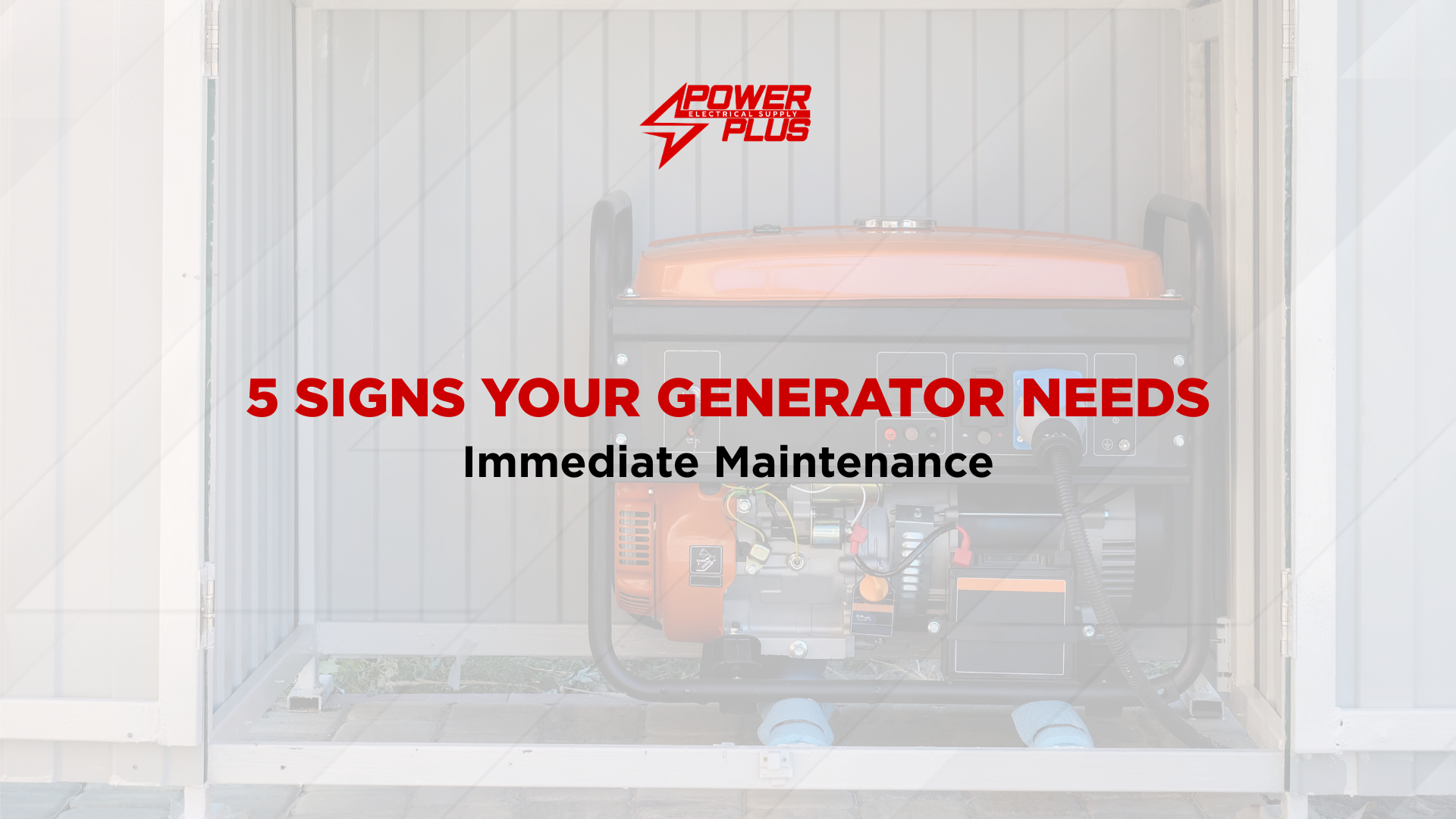
Generators are one of those business investments that people rarely think about—until they suddenly stop working when they’re needed most.
Whether supporting construction operations, commercial buildings, warehouses, or industrial facilities, generators act as a safety net during unexpected outages. But like any equipment, generators need regular maintenance to perform reliably.
The challenge is that generator issues don’t always appear dramatically. Most of the time, they start with small warning signs that are easy to ignore—until downtime becomes unavoidable.
Here are five signs your generator may already be asking for maintenance.
1. Your Generator Takes Longer to Start (or Doesn’t Start Consistently)
A healthy generator should start smoothly and operate without excessive delay.
If you notice:
- Multiple start attempts
- Delayed engine response
- Needing resets before operation
- Random startup failures
These may indicate underlying issues with the battery, fuel delivery, starter components, or electrical connections.
Many businesses only discover this problem during an actual outage—which is exactly when backup power should work immediately.
2. Unusual Noises During Operation
Generators naturally produce operational noise—but unusual sounds are different.
Watch out for:
- Grinding
- Knocking
- Excessive vibration
- Metal-on-metal sounds
- Sudden increases in operating noise
These symptoms may point to worn mechanical parts, loose connections, engine issues, or internal damage.
Addressing unusual sounds early often prevents larger and more expensive repairs later.
3. You Notice Fuel, Oil, or Fluid Leaks
Leaks are never normal.
Visible signs around your generator could indicate:
- Oil leakage
- Fuel system issues
- Coolant problems
- Damaged seals
Even minor leaks can gradually affect generator performance and reduce efficiency.
Beyond performance concerns, leaks may also create workplace safety risks and increase maintenance costs over time.
4. Power Output Feels Unstable
The goal of a generator isn’t simply to turn on—it should provide stable, dependable power.
Signs of unstable output include:
- Flickering lights
- Equipment restarting unexpectedly
- Voltage fluctuations
- Sensitive equipment malfunctioning
Commercial and industrial operations often depend on stable power to protect machinery and maintain productivity.
If your generator cannot maintain consistent performance, maintenance should be scheduled immediately.
5. It Has Been Running Without Preventive Maintenance
Sometimes the biggest warning sign is not seeing any signs at all.
Generators can appear functional while internal wear continues to build.
If your generator hasn’t been inspected in months—or even years—it may already be operating below optimal performance.
Routine preventive maintenance helps:
- Extend equipment lifespan
- Reduce emergency repairs
- Improve efficiency
- Protect business continuity
Waiting until a failure happens usually costs more than maintaining the equipment proactively.
Why Generator Maintenance Matters for Businesses
Generator downtime doesn’t only affect electricity.
It can affect:
- Operations
- Deadlines
- Employee productivity
- Equipment safety
- Customer experience
Reliable backup power creates confidence that your business can continue operating even during unexpected interruptions.
Conclusion
Generators are built for reliability—but reliability only happens with proper maintenance.
Recognizing the warning signs early gives businesses the opportunity to act before small issues become expensive breakdowns.
If your generator is showing any of these symptoms, now may be the right time to schedule inspection, maintenance, or upgrades before downtime becomes a problem.
CTA
Need reliable generator and electrical solutions for your business?
Explore dependable power solutions and electrical supplies with Power Plus Electrical Supply.